Ep. 67: From Self-Criticism to Self-Compassion: How Mindfulness Changes Performance with Dr. Holly Rogers
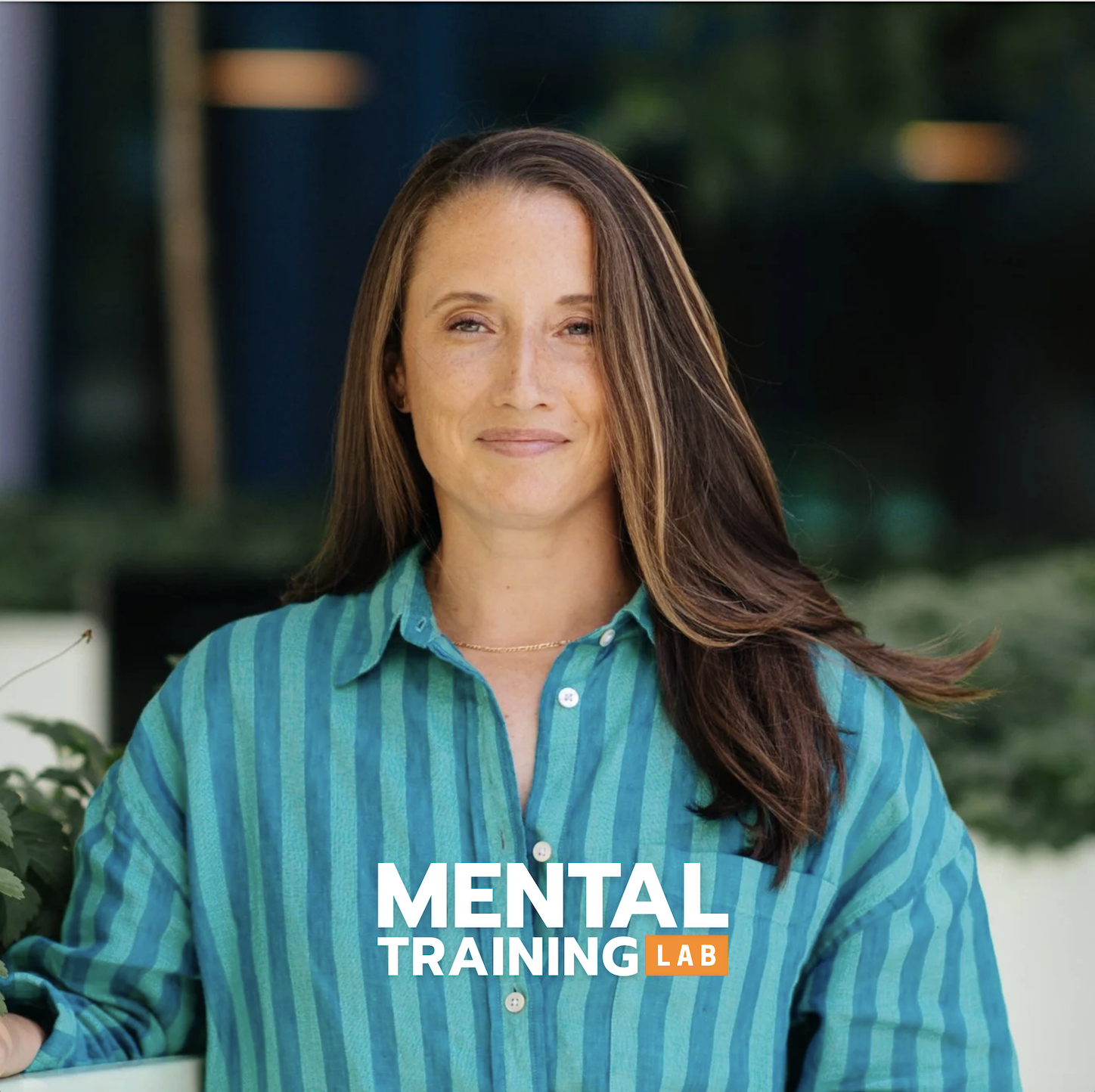
All the episodes of the Mental Training Lab feel like glorious, geeked-out conversations, and there are certain episodes that feel like opening a doorway. My conversation with Dr. Holly Rogers sits firmly in the latter category. Holly is a psychiatrist, a meditation teacher, and a quiet force in the world of contemplative practice who has spent more than three decades teaching people, from college students to high performers to anyone wrestling with the demands of daily life, how to relate differently to their own minds.
Mindfulness and meditation aren’t new topics by any stretch. But what Holly brings to the table is a combination of scientific insight, lived wisdom, and a profoundly human way of explaining why these practices matter. This episode gave me an opportunity not only to learn from her expertise, but also to reflect on how mindfulness has shaped my own life in ways that go much deeper than just performance optimization.
These practices have changed me. They’ve changed the way I experience pressure, the way I work with athletes, and the way I relate to myself when I stumble, which, like everyone, I do (regularly!). They’ve given me a larger field of consciousness to stand in, a wider emotional range to move within, and, maybe most importantly, the ability to “begin again” with more compassion and curiosity than I ever would have thought possible. This blog is an invitation for you to step into that same field, guided by the insights Holly shared and the stories that emerged along the way.

Holly’s Path to Mindfulness
One of the things I love about asking people how they found meditation is how ordinary the beginning usually is. Holly was riding a bus, jetlagged, in transition, not looking for anything in particular, when she stumbled on a book called Mindfulness in Plain English. At the time, she was a psychiatry resident, steeped in a clinical world focused on symptoms, diagnoses, and treatment plans. She wasn’t looking for a spiritual overhaul; she just needed something to read on a long ride.
But the book’s message landed with the force of a revelation. It helped her understand that so much of our suffering isn’t about the circumstances of our lives, but about the way we relate to those circumstances, the interpretations, beliefs, reactions, and habitual patterns that sit between us and what’s actually happening.
This wasn’t vague, poetic philosophy for Holly. It was practical. It was immediate. And it opened a path that eventually led her into Vipassana (mindfulness) meditation, a practice focused on training the mind to be present, grounded, and non-judgmental in the midst of whatever life brings.
After returning to Duke, she found a teacher and a small meditation community. That simple step, sitting with others, learning together, relating differently to her own experience, became the foundation for decades of work teaching mindfulness to college students, graduate students, athletes, and anyone navigating the uncertainty and intensity of modern life.
But the beauty of mindfulness, and something Holly articulated gently and clearly, is that the doorway to the present is never very far away. It’s always right in front of us. It’s always accessible. And for most of us, the journey begins not with sweeping transformation, but with noticing something simple: the way we talk to ourselves… the way we constrict in a moment of difficulty… the way our nervous system heats us up or locks us down when life demands more than we think we have.
That simple act of noticing is where everything changes.
Mindfulness as Mental Training: Expanding the Stretch Zone
One of the most helpful frames Holly shared is her model of three concentric circles: the comfort zone, the stretch zone, and the overwhelm zone. Most of life involves moving between these three states, sometimes intentionally, sometimes not. Peak performance happens in the stretch zone, the place where we’re challenged but not flooded, engaged but not redlined, growing but not losing ourselves.
Meditation, she explained, isn’t about staying calm or floating in peaceful detachment. It’s training the mind to widen that stretch zone so it can hold more life without tipping into overwhelm. It’s about building the nervous system capacity to tolerate discomfort, uncertainty, emotion, and effort while remaining connected to the present and without shutting down or fighting against the moment.
This is where mindfulness intersects so beautifully with athletics and performance. When athletes learn to expand their stretch zone, they handle pressure better, make better decisions, recover faster, take risks with greater clarity, and stay connected to their training in a deeper way. They’re present. They’re awake. And they’re able to pivot, adapt, and respond with more wisdom and skill because they’re not burning precious energy trying to control their fear, judgment, or self-criticism.
And this isn’t just true for athletes. Anyone navigating a demanding career, parenting, relationships, health challenges, or the daily complexity of being human can benefit from expanding their stretch zone. Holly’s reminder is simple but profound: we don’t get there by forcing ourselves to be better. We get there by learning to relate differently to what we feel.
When Self-Criticism Softens and Something New Becomes Possible
Years ago, on my cushion in my bedroom, I found myself watching a younger version of me emerge in my mind. This was the version shaped by wrestling culture, by the drive to grind harder, push more, tough it out. The version of me who believed the only way to earn anything, success, love, belonging, was to suffer for it.
And for the first time, instead of only touching into the frustration and grief of a career-ending injury and the belief that I’d never done enough, I saw it from the outside. I saw its deep desire, its exhaustion, its heartbreak. I saw ‘little Pete’, struggling and wanting, and too afraid to go after it. And without trying, without effort, the impulse arose to reach out, to offer kindness instead of critique. I just wanted to give him a hug.
The tears came quickly and plentifully, not because something was wrong, but because something had finally softened.
That softness didn’t make me weaker. It gave me more space. It gave me choice. It allowed me to show up with greater presence and less noise when working with athletes under pressure, when facing my own challenges, when navigating uncertainty. This is what mindfulness does when practiced consistently: it changes the texture of our inner world so the outer world feels more workable.
And as Holly said, in thirty years of teaching meditation, she has never seen a single person become lazier, less ambitious, or less driven by being kinder to themselves. What does happen is the opposite: people free up energy that was previously locked inside self-judgment and direct it toward growth, excellence, and connection.
What Meditation Actually Looks Like: The Simplicity That Saves Us
One thing Holly did beautifully in our conversation was demystify meditation. Vipassana meditation is simple: sit down, pay attention, notice what’s happening inside, allow it, and return gently each time the mind wanders. That’s it. It’s not about achieving calm. It’s not about banishing thoughts. It’s not about getting good at noticing and not interfering with what’s already unfolding.
It’s a practice of continual returning, or as Sam Harris says ‘beginning again’.
That phrase, beginning again, is the heart of mindfulness. Every time we drift, we return. Every time we judge ourselves, we practice softening. When we resist discomfort, we learn to discern when it’s skillful to stay with it just a moment longer, and when it’s time to step back. We strengthen the neural pathways that support clarity, resilience, presence, and emotional regulation.
And over time, the mind becomes more pliable. The nervous system becomes more stable. Our reactions become less automatic and more intentional. This is mental training at its core. And it’s accessible to anyone willing to take ten minutes a day to sit, notice, and begin again.
Actionable Strategies for Starting a Mindfulness Practice
Mindfulness isn’t an abstract philosophy; it’s a trainable quality of attention! For anyone wanting to integrate these practices into daily life, here are three grounded, practical approaches that reflect both Holly’s teachings and my own experience:
1. Start small, but practice daily.
The power of meditation comes from consistency first. Even ten minutes a day can change your relationship to stress, emotion, and performance. Set a timer, sit somewhere comfortable, and simply observe your breath or bodily sensations. The mind will wander, returning is the practice.
2. Find a teacher or community to support you.
People stick with meditation when they have support. Holly spoke about the importance of community meditation groups, structured courses, and guided sessions. Whether you join an online group, work with a teacher, or practice with a friend, connection strengthens commitment.
If you’re looking for a small way to get started, I offer free guided meditations each week on Tuesday mornings (10:30a-11:00a CT). You can sign up here!
3. Practice kindness toward yourself, especially during struggle.
This might be the most important takeaway from the entire conversation. Kindness is not the opposite of ambition; it’s the fuel for sustainable excellence. Try noticing your inner critic and intentionally softening the voice. You’ll be amazed at the psychological space that opens. One of my favorite teachers, Matthew Hepburn, shared on retreat that when your cushion becomes a place of kindness, everything becomes much more easeful.
The Throughline: Mindfulness as a Way of Being With Ourselves
As I reflect on my conversation with Holly, what stays with me most is the thread that connects everything she shared: mindfulness is not about becoming someone different or achieving a perfectly calm mind. It’s about cultivating a new way of being with ourselves, one grounded in awareness, compassion, and presence.
This matters for performance, absolutely. Athletes who meditate learn to stay composed under pressure, regulate emotion more effectively, and recover more quickly. Leaders who meditate communicate more clearly and listen more deeply. Students who meditate handle stress with more resilience and perform better academically.
But the real impact is far more personal. It’s the shift from living in constant evaluation mode, judging, comparing, striving, to living with more curiosity and spaciousness. It’s learning to pause when life pushes hard. It’s discovering that we can meet our experiences with kindness instead of criticism, and that doing so changes everything downstream.
Holly’s story reminds us that mindfulness isn’t a quick fix for stress or a tool reserved for monks or mystics. It’s a human practice designed for human problems, overwhelm, self-doubt, fear of failure, emotional reactivity, perfectionism, and the countless ways we complicate our own lives. It’s an invitation to participate more fully in the world with a clearer mind, a steadier heart, and a deeper connection to ourselves and others.
My hope is that this conversation, and this blog, serves as an invitation for you to take the smallest possible step toward your own practice. Ten minutes. One mindful breath. A moment of awareness before reacting. A softening toward your own struggle.
Because that’s where mindfulness begins: not with transformation, but with noticing… and beginning again.
RESOURCES:
Information about all of MIEA’s programming can be found here.
Check out Holly’s book The Mindful Twenty Something
Recent Episodes