Ep. 76: From Formula 1 to the Boardroom: Building Trust and High-Performance Teams with Peter Hodgkinson
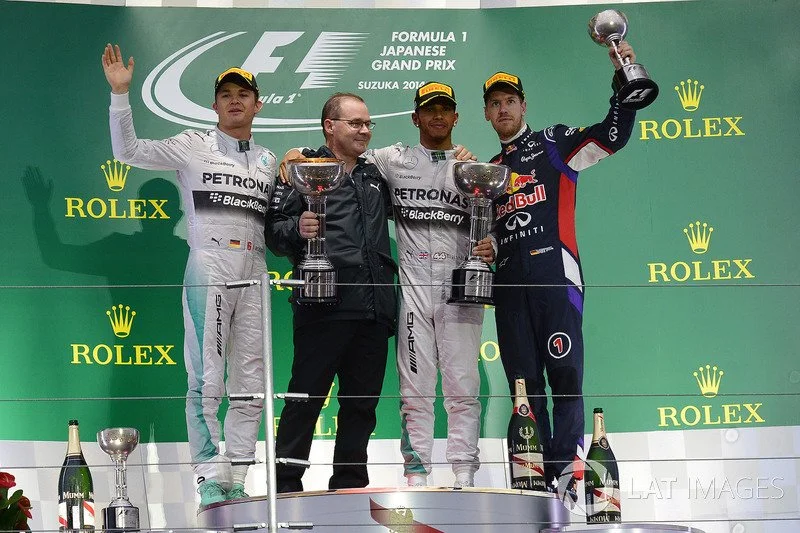
When I sit down with someone like Peter Hodgkinson, I know we’re going to get into something deeper than surface-level leadership ideas. Peter has spent decades inside some of the highest-pressure environments in the world, Formula 1, Le Mans, the America’s Cup. Places where performance is measured in milliseconds and mistakes are incredibly expensive. But what struck me most in our conversation wasn’t the speed or the stakes. It was how human everything is underneath it all.
Because at the end of the day, whether you’re in Formula 1 or leading a team in a completely different domain, the same questions show up: How do we build trust? How do we perform under pressure without burning out? How do we create environments where people can actually do their best work consistently?
That’s what this conversation became about. And for me, it felt incredibly relevant, not just for the performers and teams I work with, but for anyone trying to lead, perform, or build something meaningful over time.
The Trap of “Outworking Everyone”
One of the things I appreciated most about Peter’s story is how honest he was about his early approach to performance. Like a lot of us, he built his identity around being the hardest worker in the room. Long hours, constant output, pushing through fatigue, that was the game. And to be fair, that works… for a while.
I see this all the time with the athletes and leaders I work with. That “I’ll just outwork everyone” mentality can get you really far early on. It builds skill, earns respect, and creates momentum. But eventually, the environment changes, demands get bigger, systems get more complex. And suddenly, effort alone isn’t enough.
Peter described this shift really clearly. As his roles expanded, he realized he couldn’t just grind his way to better outcomes. He had to start thinking differently, about delegation, about recovery, about how to design an environment where performance didn’t rely on him doing everything. That’s a hard transition because it requires letting go of something that has worked for you for a long time.
And if I’m being honest, I see pieces of myself in that too. That instinct to push, to squeeze more out of effort, to rely on urgency as a driver. There’s a place for that, but it can’t be the only tool in the toolbox.

Rethinking Leadership: It’s Not About You
Early in the conversation, Peter reframed something that’s really easy to get wrong about leadership: He said that leadership isn’t about imposing your vision on others. It’s about understanding their vision, connecting that vision to the bigger picture, and empowering them to move toward it.
A lot of leadership models we grow up with are centered around the individual at the top. The leader sets the tone, defines the direction, drives the outcome. But what Peter is pointing to is something more relational and dynamic. Leadership is about creating the conditions where other people can thrive.
And that requires paying attention and treating people differently, not because you’re inconsistent, but because you’re responsive to what each person actually needs. That’s something I’ve been thinking a lot about in my own work. When I’m working with an athlete or a client, it’s not about plugging them into a system I’ve already built. It’s about understanding who they are, what matters to them, and how we can build something that works for them.
A Simple but Powerful Framework for Trust
One of the most actionable parts of this conversation was Peter’s breakdown of trust. Instead of treating trust as this abstract, hard-to-define concept, he broke it down into three components:
Reliability
Capability
Relationship
And as he was walking through it, I found myself thinking about how often we talk about trust without actually defining it. Reliability is about consistency, doing what you say you’re going to do. Capability is about competence, having the skills to deliver. And relationship is about connection, whether people feel like you care about them and understand them.
What I like about this framework is that it gives you a way to diagnose trust, not just talk about it. If trust is breaking down on a team, you can ask: Is this a reliability issue? A capability issue? Or a relationship issue? Because those are very different problems, and they require very different solutions.
When you can name it clearly, you can start to address it more effectively.
Psychological Safety Isn’t Soft, It’s Performance
Another theme that came up again and again was psychological safety. I think this is one of those concepts that can get misunderstood, especially in high-performance environments. There’s this idea that psychological safety is about being nice, or lowering standards, or making things easier…. But that’s not what we’re talking about here.
What Peter made really clear is that psychological safety is about creating an environment where people can fully engage in the task at hand. Where they’re not wasting energy worrying about how they’re being perceived, whether they’re going to get cut, or whether it’s safe to speak up. When those concerns are present, they take up bandwidth. And when bandwidth is limited, performance suffers. Our nervous systems respond reliably to threat, and you can’t outthink your nervous system.
I’ve seen this firsthand: an athlete feels safe, when they trust their environment, their coaches, their teammates, they’re able to focus more fully on execution. They can take risks, adapt, and stay present under pressure. But when that safety isn’t there: decision-making slows down, creativity drops, performance becomes more fragile.
The big takeaway here, in flashing lights on a giant marquee, is that psychological safety isn’t a luxury. It’s a prerequisite for consistent, high-level performance.
When Values Actually Mean Something
One of the examples Peter shared that really stuck with me was from his time at Mercedes. Like a lot of organizations, they introduced purpose, vision, and values. But what made it different is that they didn’t just talk about them, they built them into the system.
Performance reviews weren’t just about technical output. They were 50% technical and 50% behavioral. In other words, how you showed up, how you communicated, how you contributed to the team, mattered just as much as what you delivered. And incentives were aligned with that.
In a lot of environments, there’s a gap between what we say we value and what we actually reward. And over time, people follow the incentives, not the messaging. So if you say you value collaboration but only reward individual output, you’re going to get individual behavior.
What Peter described is a system where values are operationalized. Where they show up in feedback, in evaluation, in the way people are recognized and rewarded. That’s how culture actually changes.
Pressure, Burnout, and the “Second Gear” Problem
Peter described teams and individuals who are constantly operating just below their maximum, but never fully recovering. They’re always on, pushing, in motion. From the outside, it can look like productivity, but over time, it leads to burnout.
I’ve worked with a lot of athletes who live in that space. And if I’m being honest, I’ve spent time there myself. There’s a certain identity that comes with it. You feel like you’re doing the right thing because you’re working hard, but the cost is that you never fully recharge. And without recovery, performance becomes less consistent, less resilient, and less sustainable.
What Peter emphasized, and what I think is really important, is that sustainable performance requires a balance between stress and recovery. Not just physically, but mentally and emotionally. And that balance has to be built into the system. It can’t just be left up to individuals to figure out on their own.
The Power of Consistency
At one point, I asked Peter what one thing listeners could start doing right away. And his answer was simple: consistency. Consistency builds trust, creates predictability, and reduces uncertainty. And in high-pressure environments, those things matter a lot.
This can show up in small ways, consistent meeting times, consistent communication, consistent follow-through. But over time, those small things add up to something bigger. They create an environment where people know what to expect, and that allows them to focus more fully on their work. For me, this was a good reminder that not everything has to be complex to be impactful.
Three Ways to Apply This Right Away
If you’re thinking about how to bring some of these ideas into your own work, here are three places I’d start:
1. Get Specific About Trust
Take a look at your team or environment and ask yourself: Where is trust strong, and where is it breaking down? Then use Peter’s framework (reliability, capability, relationship) to get more specific. That clarity will help you take more targeted action.
2. Align What You Say with What You Reward
Think about the values you talk about most. Then look at your systems: feedback, recognition, incentives. Are they reinforcing those values, or are they pulling in a different direction? If there’s a gap, that’s an opportunity to make a meaningful shift.
3. Build One Consistent Anchor
Identify one area where you can introduce more consistency. It could be a weekly check-in, a structured debrief, or even just a consistent way you open meetings. Start small, but make it reliable. Over time, that consistency will create stability and trust.
Bringing it all together
What I took away from this conversation is that high performance isn’t just about pushing harder. It’s about building better systems. Systems that support people, that create clarity, that allow for both effort and recovery. Peter’s experience in Formula 1 makes these ideas feel real, but they’re not limited to that world. They apply anywhere people are trying to do meaningful work under pressure.
And for me, this was a reminder that the goal isn’t just to perform once. It’s to build something that allows you, and the people around you, to perform consistently, sustainably, and with a little more humanity along the way.
Keep your tires warm. That’s all from the lab.
Recent Episodes