Ep. 80: Psilocybin, Performance, and Deep Healing: Adam O'Neil on Going Beyond Mental Skills
**Before getting into this conversation, I want to name something important. This episode and
this blog are for educational purposes only. They are not medical advice, and they are not an
invitation to pursue psilocybin or any other psychedelic casually. Psilocybin is not appropriate for
everyone, laws vary depending on where you live, and anyone interested in this kind of work
should seek guidance only from qualified professionals operating in legal, regulated, and
ethically grounded settings.**
With that said, I believe this conversation belongs on The Mental Training Lab because many
athletes and high performers eventually reach a point where traditional tools, while useful, are
not the whole picture. Mental skills training can help someone focus, regulate, prepare,
visualize, breathe, and perform under pressure. These tools are valuable, and are an important
part of the work I do with clients. And... sometimes the obstacle is not a lack of tools.
Sometimes the obstacle is a deeper relationship with identity, shame, trauma, fear, or the belief
that performance is the only way to earn safety and belonging.
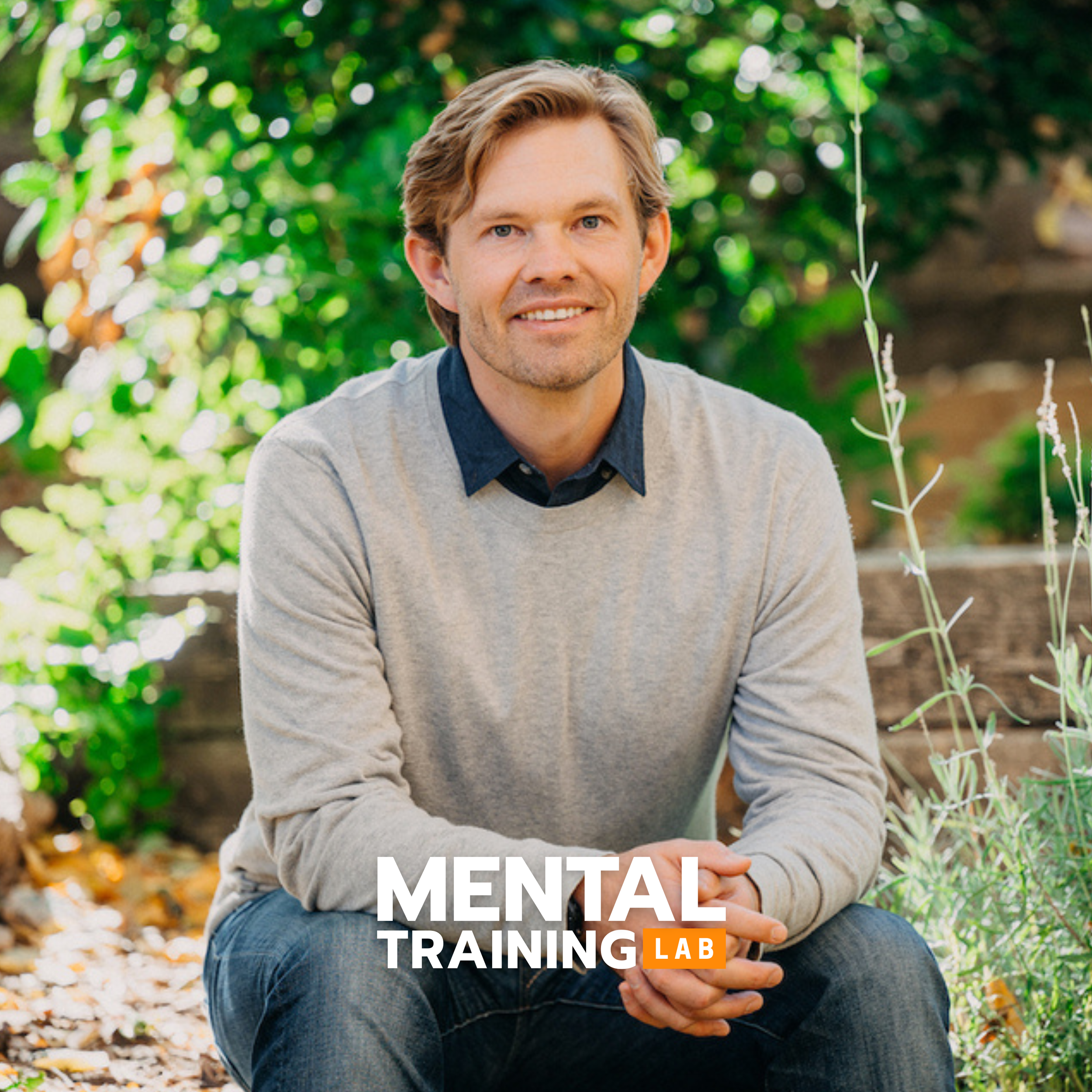
That is why I wanted to talk with Adam O'Neil, a licensed psychologist and clinical psilocybin
facilitator based in Boulder, Colorado. Adam works at the intersection of conventional mental
health care, performance psychology, and natural medicine. His work with athletes, executives,
and high-performing clients is rooted in comprehensive assessment, deep preparation, careful
facilitation, and integration. Adam brings extensive knowledge of psilocybin-assisted therapy
and approaches it with seriousness and humility.
Adam is not approaching this work as a shortcut or a performance hack. In fact, one of the
things I appreciated most was how clearly he resisted the idea that plant medicine should be
framed as another optimization tool for high achievers. Instead, he described it as a potentially
profound therapeutic process that requires structure, safety, relationship, and respect. For a
population that often wants fast results and measurable gains, that distinction matters. Healing
is not the same thing as optimization, even though healing can profoundly and positively affect
how we perform.
Why Assessment Comes First
In performance psychology, assessment can sometimes be treated as a preliminary step before
the “real work” begins, but Adam approaches it as central to the entire process. He talked about
his background in comprehensive psychological assessment and how that training continues to
shape his work with psilocybin-assisted therapy. Before anyone enters a psilocybin session,
there needs to be a careful understanding of their health history, psychological history, current
supports, risks, intentions, and readiness.
This is particularly important because, as Adam points out in our conversation, psilocybin is a
nonspecific amplifier. It will intensify internal experiences rather than simply producing a
predictable outcome. That means whatever is present in the system (grief, fear, hope, shame,
beauty, confusion, longing) may become more available. For some people, that can be deeply
healing. For others, especially without adequate preparation or support, it can be destabilizing.
Adam described a process that includes an initial inquiry, detailed health and psychological
history, preparation sessions, a facilitated journey day, and integration afterward. The journey
itself can last many hours, and Adam emphasized the importance of facilitators who are not only
clinically trained but personally familiar with the territory they are helping clients navigate. That
point stood out to me because in high-performance environments, we often talk about the
importance of trust. In this setting, trust is not optional... it is foundational.
Why This Matters for Athletes and High Performers
Athletes and high performers are often highly skilled at compartmentalization. They learn to put
difficult emotions aside, perform through discomfort, and maintain control under pressure. These
capacities can be adaptive and even necessary in certain contexts. The problem is that the
same capacities that help someone survive competition, public scrutiny, or high-stakes
leadership can become barriers when deeper healing is required.
In our conversation, Adam described psilocybin-assisted therapy as a process that may help
people encounter parts of themselves that have been defended against, avoided, or exiled. For
high performers, that might include shame around injury, grief after career transition, trauma
from sport environments, or identity structures built around achievement. Traditional mental
skills can help manage symptoms and improve functioning, but there are times when the deeper
work asks for a different posture. That posture is not control. It is acceptance.
Adam spoke about acceptance as a central part of the work. This does not mean passivity,
resignation, or pretending that everything is fine. Acceptance in this context means staying
awake and present with what is arising, rather than automatically avoiding, resisting, or trying to
fix it. For athletes who have built their identity around mastery and control, that can be one of
the hardest skills of all.
Acceptance, Surrender, and the Limits of Control
One of the pieces I found most compelling was Adam’s distinction between avoidance,
approach, and acceptance. Many high performers are excellent at approach. They can move
toward a goal, attack a problem, and generate effort. Many are also skilled at avoidance, though
they may not call it that. They can stay busy, stay productive, keep training, keep achieving, and
never slow down long enough to feel what is underneath.
Acceptance asks for something different. It asks us to stop fighting reality long enough to learn
from it. In psilocybin-assisted therapy, Adam described this as staying open to the experience
rather than trying to force it in a particular direction. He offered small phrases and cues clients
might use internally, such as “huh” or “that’s a hell of a trick,” as ways of meeting the mind’s
surprising turns with curiosity rather than panic.
That kind of acceptance has obvious overlap with mental performance work. An athlete under
pressure cannot control every thought, sensation, or emotion that arises. What they can train is
the relationship to those experiences. Do they tighten and resist, or can they make contact with
what is happening and respond with more flexibility? In that sense, even listeners who never
pursue plant medicine can learn something important from this conversation. The deeper skill is
not the substance. The deeper skill is how we meet ourselves.
The Role of Ancestral Wisdom and Cultural Humility
Another important thread in this episode was Adam’s attention to ancestral wisdom and cultural
sensitivity. Psilocybin and other plant medicines did not originate in modern clinical settings,
wellness culture, or performance optimization spaces. They have long histories within
Indigenous and traditional communities, and any contemporary use of these medicines needs to
be approached with humility, respect, and a willingness to learn.
Adam talked about the importance of ‘right relationship’ in this work. That includes ongoing
learning, collaboration, mentorship, and awareness of the communities that have carried
knowledge of these medicines long before they entered Western clinical research. This matters
because the growing mainstream interest in psychedelics brings both promise and risk. Without
cultural humility, there is a danger of extraction, oversimplification, or turning sacred and
therapeutic practices into another consumer product.
For high performers, this point may feel far removed from the practical question of healing or
performance, but I think it belongs at the center. The way we relate to a practice shapes the
practice itself. If we approach plant medicine only as a tool to get more productive, more
creative, or more competitive, we may miss the very wisdom it has to offer. Adam’s perspective
invites a slower, more respectful orientation; one grounded in listening, humility, and
responsibility.
Integration Is Where the Work Becomes Real
A theme that came up repeatedly was integration. In popular conversations about psychedelics,
the journey often gets the most attention. People talk about the experience, the visions, the
insights, or the intensity of the session itself. Adam made it clear that the session matters, but it
is not the whole process. What happens afterward may be just as important.
Integration is the process of taking what was encountered in the session and bringing it into
daily life. That may involve changes in relationships, behavior, self-talk, boundaries, recovery, or
identity. Without integration, even a profound experience can remain isolated, something
remembered but not lived. With integration, insight can become practice.
This connects strongly to performance work. Insight alone rarely changes behavior. Athletes can
understand what they need to do and still struggle to do it under pressure. Leaders can have a
breakthrough and still return to old patterns when stress rises. Integration is the bridge between
awareness and embodiment. It is where the lessons become habits, choices, and new ways of
relating.
The Limits of Traditional Mental Skills
I do not see this conversation as a rejection of traditional mental skills training. If anything, I see
it as an expansion. Skills like breath regulation, attention control, imagery, self-talk, routines, and
emotional awareness still matter. They can help athletes and performers build stability,
confidence, and readiness. But Adam’s work highlights that skills sit on top of deeper layers.
If someone’s nervous system is carrying unresolved trauma, if their identity is organized entirely
around achievement, or if they are driven by shame, mental skills may help them function but
not necessarily heal, and the truth is, the skills will end up operating within the structures that
exist, creating progress while reinforcing a deeper degree of stuckness.
That does not make the skills unimportant. It simply reminds us that performance is layered.
Sometimes we need tools for the moment, and sometimes we need a deeper process that helps
us understand why certain patterns keep repeating.
For me, this is one of the most important takeaways from the episode. Healing and performance
are not distinct processes. The way a person relates to themselves, their past, their body, and
their emotions will inevitably shape how they show up under pressure. When we address
deeper patterns with curiosity and care, performance may improve not because we chased it
directly, but because the person becomes more whole.
Actionable Takeaways for Listeners
Whether or not psilocybin-assisted therapy is part of your path, there are several practical
lessons from this conversation that apply to athletes, coaches, and high performers.
1. Take assessment seriously. Before you chase another tool, protocol, or intervention,
pause long enough to understand what is actually happening. Are you dealing with a
focus issue, a recovery issue, a trauma response, an identity threat, or a deeper pattern
of avoidance? The right intervention depends on the right understanding.
2. Practice acceptance in low-stakes moments. You do not need a psychedelic
experience to begin training a different relationship with discomfort. The next time
anxiety, shame, frustration, or sadness arises, experiment with meeting it with curiosity
before trying to fix it. A simple internal phrase like “huh, this is here” can create enough
space to shift from automatic resistance into awareness. Over time, this skill becomes
deeply relevant to performance under pressure.
3. Prioritize integration whenever insight appears. If you have a meaningful realization
in therapy, meditation, journaling, coaching, or conversation, do not stop at the insight.
Ask what it changes in your daily life. Does it ask for a boundary, a conversation, a new
recovery practice, or a different way of speaking to yourself? Insight comes alive when
we connect it to actions, and those actions become the behavior and identity change
over time.
Closing Reflection
My conversation with Adam left me thinking about how often high performers try to solve deep
pain with more performance. We add tools, increase discipline, refine routines, and keep moving
forward. Sometimes that helps. Sometimes it keeps us from noticing the parts of ourselves that
are asking for something more honest.
Psilocybin-assisted therapy is not a magic answer, and it is not for everyone. Adam was clear
about the need for legality, safety, assessment, preparation, facilitation, and integration. But the
deeper invitation of this conversation extends beyond psilocybin itself. It asks us to consider
what healing might look like if we stopped treating ourselves as problems to optimize and
started relating to ourselves as whole human beings with stories, wounds, wisdom, and
capacity.
For athletes, coaches, and high performers, that is a powerful reframe. The goal is not simply to
perform better. The goal is to become more whole, more awake, and more capable of meeting
life as it is. Sometimes that means building skills. Sometimes it means seeking support.
Sometimes it means entering deeper work with humility and care.
And sometimes, the next level of performance begins not by pushing harder, but by finally
listening to what has been waiting underneath.
Learn more about Adam’s work: www.theclearingboulder.com
Recent Episodes