Ep. 82: Inside the Mind of a Tour de France Rider: Brent Bookwalter on Pain, Performance, and the Mental Game
Mental skills are easy to talk about in theory. We can define attention control, motivation, self-talk, mindfulness, acceptance, and identity with clean language and tidy models. But the real test is whether those concepts hold up when the body is exhausted, the pressure is rising, and the outcome matters.
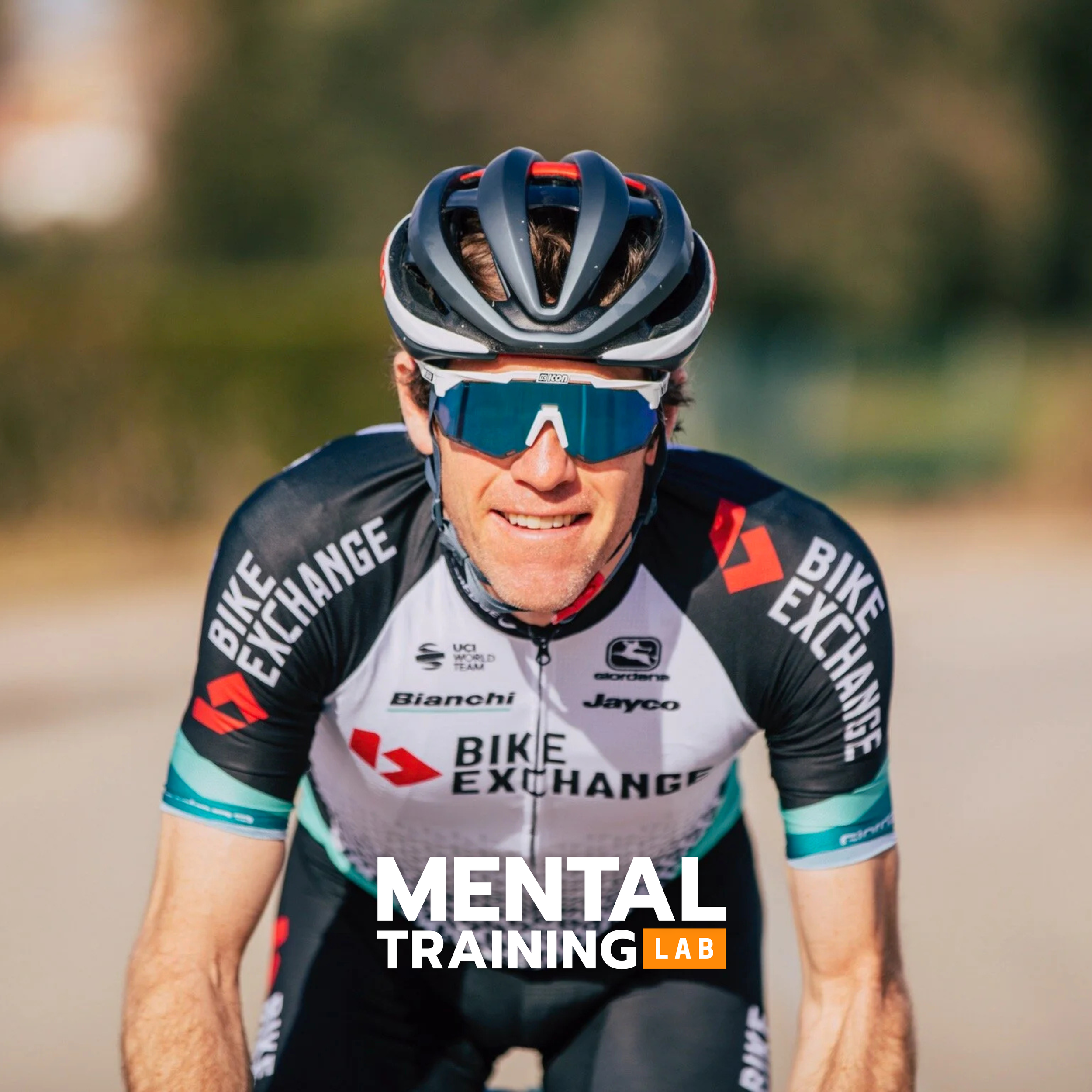
That is why I was so excited to sit down with Brent Bookwalter for an episode of The Mental Training Lab. Brent is a former WorldTour professional cyclist who raced in the Tour de France, the Olympics, and World Championships. He was part of the 2011 Tour de France-winning team, serving as a key support rider, or domestique, in one of the most demanding team environments in sport. Since retiring from pro cycling, Brent has moved into broadcasting, mental performance coaching, and a new chapter of life that includes parenting, partnership, and continued personal growth.
What makes Brent’s perspective especially valuable is that he is now standing in two worlds at once. He has the lived experience of someone who spent years inside the peloton, enduring the pain, pressure, loneliness, and complexity of elite endurance sport. He also has formal training in mental performance, having completed graduate work that gave him language and structure for many of the things he had been navigating intuitively for years. That combination of experience and theory was at the heart of our conversation.
Bridging Experience and Theory
One of the big themes we explored is the difference between figuring something out over time and training it deliberately. Brent was clear that many professional athletes develop mental skills because they have to. When you are racing at the Tour de France or representing your country at the Olympics, you learn how to manage pressure, pain, uncertainty, and fatigue because the environment demands it. But without the language of mental performance, those lessons can remain implicit. You know what works, but you may not fully understand why it works or how to teach it to someone else.
A lot of athletes succeed by accumulating experience, but experience alone can be inefficient and costly. Mental performance training gives structure to that process. It helps performers recognize what they are already doing well, identify where they are getting stuck, and accelerate growth with more intention. Brent’s journey into mental performance coaching reflects that shift. He is not replacing his lived experience with theory; he is organizing that experience through frameworks that make it more useful to others.
This is one of the core experiments of The Mental Training Lab: to bridge what performers know in their bones with the language, research, and practices that help them apply it more deliberately. Brent spent years living the reality of mental performance. Now he can translate that reality for athletes, parents, business leaders, and other high performers who may be facing different contexts but similar psychological demands.
The Role of the Domestique
Throughout his career, Brent was not always the headline rider. In cycling, the domestique is the support rider whose job is to work for the team leader. That role requires an enormous amount of discipline, humility, and psychological flexibility. You are sacrificing your own chance at individual glory in service of a collective objective, often while enduring the same brutal physical demands as the riders whose names end up at the top of the results sheet.
From a mental performance perspective, that role is incredibly rich. It asks an athlete to clarify purpose beyond ego, to find meaning in contribution, and to stay motivated even when the reward structure is not centered on personal recognition. That connects directly to self-determination theory, which Brent and I discussed in the episode. The theory highlights three basic psychological needs that support motivation: autonomy, competence, and relatedness.
Brent’s career gives us a real-world version of that model. Autonomy is not simply doing whatever you want; it is feeling that your actions are aligned with your values and chosen role. Competence is the sense that you are capable of meeting the demands of the task and you’re continuing to improve in meaningful ways over time. Relatedness is the feeling of connection to others and belonging within a meaningful group. For a domestique, and for all of us human beings, a lived experience of intrinsic motivation depends on all three.
When the Workhorse Has to Evolve
Brent also spoke about a pivotal moment in his career when he realized that simply being a workhorse was not enough. He had built an identity around doing the hard work, serving the team, and grinding through the suffering. That identity had value, but it also had limits. At some point, he recognized that if he wanted to continue growing, he needed support. He needed to develop new tools, new perspectives, and a broader relationship with ambition.
That moment is relevant far beyond cycling. Many high performers succeed early because they are willing to work harder than everyone else. They become reliable, tough, and useful. But eventually, the same identity that helped them succeed can start to constrain them. If you only know yourself as the worker, the grinder, or the person who can endure, it can be hard to access creativity, leadership, rest, or self-advocacy. Growth often requires more than doubling down on the traits that got you there.
This is where mental coaching can be career-changing. It does not necessarily give athletes something entirely new; often, it helps them see themselves more clearly. It expands the range of available responses. It gives structure to questions of identity, motivation, and purpose. Brent’s experience shows that mental training is not only about performing better in the moment. It can also help athletes navigate who they are becoming.
Pain, Suffering, and Acceptance in Endurance Sport
Any conversation about elite cycling eventually has to address pain. Endurance sport is full of discomfort, and professional cycling may be one of the most intense examples. Long stages, repeated climbs, crashes, weather, fatigue, and relentless competition create an environment where pain is not an occasional obstacle. It is part of the landscape.
Brent and I talked about how mindfulness and acceptance-based approaches can help performers relate differently to pain and suffering. The goal is not to pretend pain is not there, and it is not to glorify suffering for its own sake. The goal is to develop a more skillful relationship with internal experience. Pain may be present, but the athlete can learn to notice it, make room for it, and stay connected to values and action.
In acceptance and commitment approaches, the work is not always to remove discomfort. Sometimes the work is to clarify what matters enough that we are willing to carry discomfort with us. For Brent, that might have meant staying committed to the team’s objective or holding focus through a brutal stage. For the rest of us, it might mean staying present in a hard conversation, continuing a meaningful project, or showing up for a responsibility when we are tired.
The Human Side of the Tour de France
From the outside, the Tour de France can look glamorous. The scenery is beautiful, the crowds are enormous, and the history of the event gives it a kind of mythology, but Brent helped make visible the human side behind the spectacle. The Tour is also lonely, painful, exhausting, and emotionally demanding. It asks athletes to live inside constant pressure while managing their bodies, relationships, expectations, and identities.
Mental performance is also about well-being, fulfillment, and meaning. An athlete can perform well and still struggle internally. They can be part of something extraordinary and still feel isolated or uncertain. If we only talk about performance through the lens of outcomes, we miss the person inside the performance.
Brent’s story reminds us that elite sport is not separate from the rest of life. Athletes are humans with families, transitions, doubts, and evolving identities. Since retiring, Brent has become a parent, supported his wife through her PhD and career, moved back to the U.S., completed graduate school, and built a new professional identity as a coach and broadcaster. That transition is part of the performance story too. How athletes leave sport, integrate their experiences, and build a meaningful life afterward deserves just as much attention as how they compete.
From Athlete to Coach and Broadcaster
Since retiring from professional cycling, Brent has continued to serve the sport in multiple ways. As a broadcaster for Tour de France coverage, he has taken on the role of ambassador and educator, helping casual and serious fans alike understand not only what is happening tactically, but what riders are experiencing mentally and emotionally. That is a powerful extension of his work because it brings the mental side of sport into the public conversation.
As a mental performance coach, Brent is also learning how to translate lived experience responsibly. This is not always easy. Being great at something does not automatically make someone a great coach. Formal training matters because it helps coaches understand scope, ethics, individual differences, and when to refer to other professionals. Brent recognizes the value of his experience, but he also recognizes the importance of continued learning, mentorship, and support.
That tension between experience and theory is one of the most important conversations in our field. Athletes often trust people who have been there, and that lived credibility matters, but effective coaching also requires frameworks, listening skills, boundaries, and the ability to individualize.
Actionable Takeaways for Listeners
If you want to apply Brent’s story to your own performance life, I would start with three areas.
Look at your motivation through the lens of autonomy, competence, and relatedness. Ask whether you feel connected to your choices, whether you are building the skills needed for the challenge, and whether you have relationships that support your effort. When one of those three needs is missing, motivation often becomes harder to sustain.
Practice relating differently to discomfort. The next time you encounter pain, stress, or fatigue, notice the difference between the sensation itself and the story you are adding to it. You might not be able to remove discomfort, but you can train the ability to stay connected to what matters while discomfort is present. This is a skill that applies in sport, work, parenting, and any meaningful pursuit.
Be deliberate about mental training rather than waiting to figure everything out through trial and error. Experience is a great teacher, but it is not always efficient or kind. Working with a coach, studying mental performance, practicing mindfulness, or building structured reflection can help accelerate growth while supporting well-being. The goal is not just to raise your performance ceiling; it is to build a healthier relationship with the process of getting there.
Closing Reflection
What I appreciate most about Brent’s story is that it shows mental training as something lived, not merely learned. The concepts we discussed (motivation, mindfulness, acceptance, pain management, identity, and transition) were not abstract ideas placed on top of his cycling career after the fact. They were present all along, shaping how he endured, contributed, grew, and eventually transitioned into the next chapter of his life.
For listeners, that is the real value of this episode. You do not have to be a cyclist to understand what it feels like to suffer in pursuit of something meaningful. You do not have to race the Tour de France to know the tension between serving others and wanting to grow yourself. You do not have to be an Olympian to wrestle with identity, transition, pain, and motivation.
Brent’s career gives us a vivid case study in how mental skills operate inside real pressure. His next chapter reminds us that those same skills can help us make meaning after the finish line moves, the role changes, or the identity we once relied on begins to shift. That is what mental training is really about. It helps us perform, yes, but it also helps us become more conscious, more flexible, and more whole in the process.
Recent Episodes