One pattern I see often in high performers is a complicated relationship with the body. Athletes are incredibly attuned to timing, tension, rhythm, balance, and technique. A basketball player may know the feel of a shot before the ball reaches the rim; a wrestler, cyclist, runner, or hockey player may know exactly what it feels like to push into the edge of effort.
At the same time, athletes are often trained to disconnect from the body. We learn early that pain is not always a stop sign, and that pushing through discomfort can earn approval, belonging, and opportunity. That capacity can be useful, but it can also create a pattern where the body becomes an instrument to control rather than a source of intelligence to listen to. That tension was at the core of my conversation with Elisa Haggarty.
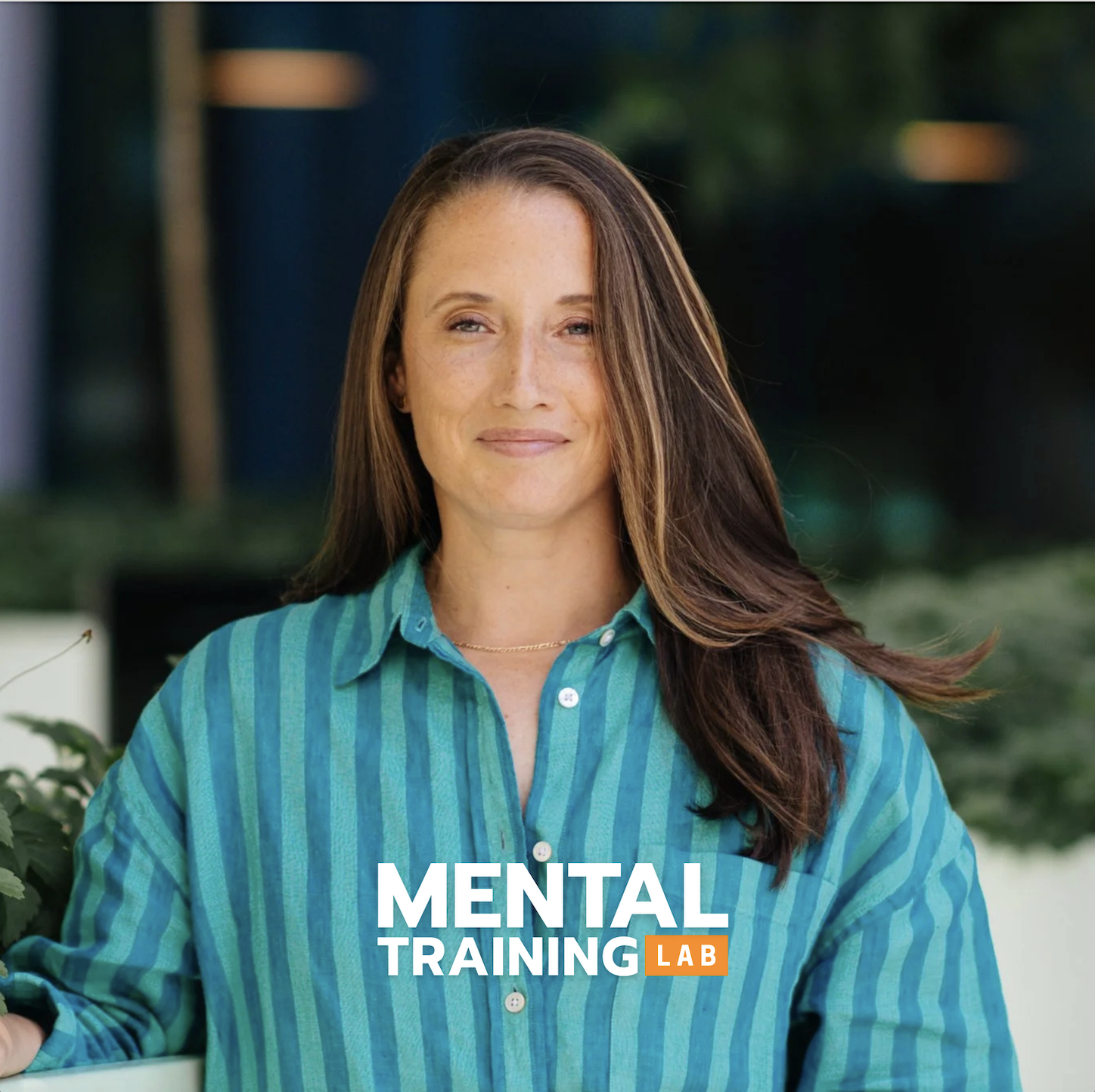
Elisa is a former basketball athlete and executive/somatic coach who works with leaders and teams to build authenticity, trust, and communication through bodily awareness, emotional honesty, and present-moment attention. Her work sits at the intersection of performance and embodiment. She helps people understand that sensations and emotions are not distractions from performance; they are data.
When Pain Becomes Proof
Elisa began by talking about her athletic background, and what struck me immediately was how she held both the joy and the cost of sport. She described growing up as the youngest of seven kids, playing basketball from a young age, and loving the sensory experience of the game: the rhythm of the ball, the feel of it in her hands, and the sound of the net. Those details matter because they remind us that sport often begins in joy.
But Elisa also named something many athletes know intimately: sport can become a pathway to love, approval, belonging, and identity. We may begin because we love the game, but over time, performance can become tied to being seen, valued, praised, or accepted. Pain starts to carry meaning. Working hard becomes proof. Pushing through becomes evidence that we care enough, belong enough, or deserve the opportunity.
I recognized a lot of my own experience in that. As a former wrestler, the idea that “if it doesn’t hurt, it doesn’t count” stayed with me long after my competitive career ended. There is a part of me that still wants to measure meaning through discomfort, which is why this conversation felt important.
Pain-Driven Productivity
Elisa used the phrase “our relationship to pain and productivity,” and I think that language opens up something bigger than sport. Athletes may get an early education in this pattern, but many of us live in a culture that rewards doing, producing, achieving, optimizing, and staying busy. Rest, leisure, repair, and non-doing can feel indulgent or even threatening when we have built our identity around output.
Pain-driven productivity can create real results, but it can also become a sophisticated avoidance strategy. Staying busy can keep us from feeling what we do not want to feel. Pushing harder can keep us from noticing what we already know. Over time, the body may keep sending signals, but we become skilled at overriding them. Eventually, we may need to relearn how to hear what has been speaking all along.
Beginning with What Is Already Here
One of the most practical parts of Elisa’s approach is that she does not make body awareness precious or complicated. When someone says, “I don’t feel anything,” she does not treat that as failure. She treats it as data. Numbness is a state. Disconnection is a starting point. Instead of judging it, she invites curiosity: what is it like to not feel much, and how is that playing out in your energy, sleep, relationships, leadership, or communication?
Many people assume they are doing somatic work wrong before they begin. They hear a question like “Where do you feel that in your body?” and feel lost, embarrassed, or frustrated. Elisa’s approach dignifies the starting point. If you feel numb, start with numbness. If you feel stuck in your head, start there. If you do not know what you feel, that is still information.
From there, the practice is simple: naming what is present:
Tightness in the chest.
Heat in the face.
Buzzing in the arms.
Tension in the jaw.
Tears behind the eyes.
Feet on the ground.
Back softening.
We do not have to immediately explain the sensation, analyze it, or build a story around it. We can begin by noticing and naming, building a more honest relationship with the present moment.
From Then and There to Here and Now
Elisa also talked about the difference between speaking from “then and there” versus “here and now.” So many conversations drift into stories about the past, projections into the future, or explanations about other people. We ask someone how they are, and they tell us about next week, last month, a colleague, a deadline, or a problem. All of that may be relevant, but it does not always tell us what is happening in the person’s system right now.
Speaking from the here and now brings us closer to the actual data in the room. Teams can spend hours talking about the project, the budget, the proposal, or the timeline while never naming the energy underneath the content. When the deeper layer is not named, the surface issue keeps recycling. The work becomes less about making everything emotional and more about making the conversation more accurate.
When the Mind Is Not So Alone
One of the most interesting parts of the conversation for me was the relationship between body awareness and clearer thinking. Elisa described how getting more into her body helped her trust her mind more. When she was disconnected, numb, or dissociated, her mind would run quickly, trying to pick one thread out of a million. When she became more grounded, her thinking became more precise and trustworthy.
That matches my own experience. When the mind and body are in partnership, the mind is less alone. It is not solving everything from the neck up. The body becomes a thought partner, offering information through sensation, emotion, movement, and energy. That does not mean every sensation is a command or every emotion is the whole truth; it means the system is more fully online.
For high performers, this is a major reframe. We often assume performing well means getting out of the body’s way or overriding its signals. But a more integrated approach suggests that the body is part of performance intelligence. When we can notice sensations without fusing to them or pushing them away, we gain access to more information and can act with more clarity.
Congruence, Trust, and the Cost of Withholding
Elisa introduced the idea of matching what is happening inside with what is expressed outside. She described it as a pathway to congruence and trust. If she is frustrated, you will know she is frustrated. If she is happy, you will know she is happy. That does not mean every emotion gets expressed without skill or consideration. It means there is a cleaner relationship between internal experience and external communication.
This matters because incongruence creates uncertainty. Most of us know what it feels like to sense someone is upset while they insist everything is fine. Their face, tone, pace, or body communicates one thing, while their words communicate another. That mismatch can make the environment feel less safe because our nervous systems are receiving conflicting information.
One line that stayed with me is that “I’m fine” is often code for “I’m not fine.” Emotional congruence is not emotional dumping, but there is a big difference between skillful discernment and chronic withholding. Elisa talked about withholding as an energetic integrity leak: if I am holding back a feeling, request, fear, story, or projection, I may start to feel drained, heavy, small, or less creative. The energy that could be available for connection and action gets used to manage the gap between what is true and what is expressed.
Aliveness as a Performance Resource
Elisa used the word aliveness, and I think it is a useful way to describe what becomes available when the body, emotions, and communication are more congruent. Aliveness is not just excitement or positivity. It is the felt sense that more of us is available to meet the moment. It includes joy, energy, creativity, clarity, sadness, frustration, fear, and connection. It is life force moving rather than being locked down.
In performance settings, aliveness matters because people do not do their best work when only a small part of them is available. If an athlete is suppressing, a leader is performing composure, or a team is avoiding what is happening, the system loses vitality. Communication becomes less precise. Trust becomes less stable. Creativity narrows.
This does not mean we need to become unfiltered or impulsive. In fact, the opposite is true. The more awareness we build, the more choice we have. Somatic awareness gives us the ability to notice what is present, allow it, and then decide how to express it responsibly.
Dignifying the Barriers
Near the end of our conversation, Elisa talked about the barriers people have to being seen. Defensiveness, righteousness, avoidance, blame, gossip, and judgment can all function as protective strategies. From the outside, those patterns may look unproductive, and often they are. But Elisa made the important point that they also make sense: they are shields people learned to use when being seen did not feel safe.
I loved the dignity in that perspective. It is easy to judge the barrier and try to remove it quickly, but if it helped someone survive, we need to approach it with respect. When a coach, facilitator, or leader can meet a person’s defenses without immediately shaming them, something softens. The person can begin to feel gotten rather than fixed.
Actionable Takeaways for Athletes, Coaches, and Leaders
If you want to apply this conversation in your own life or work, I would start with three practices:
Practice naming sensations without needing to explain them. Set aside a minute during the day and ask, “What is happening in my body right now?” You might notice tightness, warmth, heaviness, numbness, buzzing, or nothing obvious at all. Whatever is present is the starting point.
Experiment with speaking from the here and now. In a meeting, practice, coaching conversation, or relationship, notice when you are talking only about the past, the future, or other people. Then ask what is actually present in you right now. You might say, “I notice some frustration around this project,” or “I have some excitement here, and also some fear about the unknowns.” That language does not turn the conversation into therapy. It simply brings more accurate data into the room.
Look for places where withholding is draining your energy. Is there a request you have not made, a feeling you keep minimizing, or a truth you are managing instead of expressing? Choose one small, skillful way to close that gap. That might mean naming something in real time, or it might mean returning later and saying, “I did not share this earlier, but here is what was happening for me.” Over time, this commitment to matching what is here can free up energy, build trust, and increase aliveness.
Closing Reflection
My conversation with Elisa left me thinking about how much intelligence is available when we stop treating the body as something to override. For many athletes and high performers, the body has been trained, disciplined, pushed, evaluated, and optimized. But it may not have been listened to. That is a different relationship, and it takes practice to build.
The invitation here is to bring more of ourselves online: to notice what is present, speak more honestly, and let the body become part of the conversation. When we are more connected to the body, the mind becomes less alone. When we are more congruent, the people around us can trust us more clearly. And when we stop using performance to disconnect from ourselves, we create the possibility of performing with more authenticity, energy, and aliveness.
Recent Episodes