Ep. 74: Beyond the Grind: Redefining Mental Toughness with Dr. Hillary Cauthen
If you spend enough time around athletes, one phrase inevitably surfaces: mental toughness. The stories that define it are legendary. Ronnie Lott having part of his finger amputated so he wouldn’t miss the start of the season. Michael Jordan winning a Finals game while battling the flu. Athletes finishing competitions on torn ligaments or broken bones. In locker rooms across the country, those stories become more than mythology. They become the standard.
I grew up on those stories, and I subscribed to what they were telling me without even realizing what that meant. I grew up in sport environments where toughness was currency. If you could endure more discomfort than the person next to you, you belonged and you would succeed. If you could grind through fatigue, pain, or fear without letting it show, you were doing it right. So when my friend and colleague Dr. Hillary Cauthen told me that the traditional mental toughness narrative gives her the “ick,” I knew it was going to be a conversation worth having.
Hillary is a sport psychologist, the author of Hello Trauma: Our Invisible Teammate, and someone who has spent years working with athletes and teams navigating not just performance, but the human complexity underneath it. When she talks about mental toughness, she doesn’t dismiss resilience or perseverance. What she questions is the narrowness of the story we’ve told ourselves about what those qualities are supposed to look like.
And as we unpacked that idea together on the podcast, it became clear that the conversation wasn’t just theoretical. It was personal.
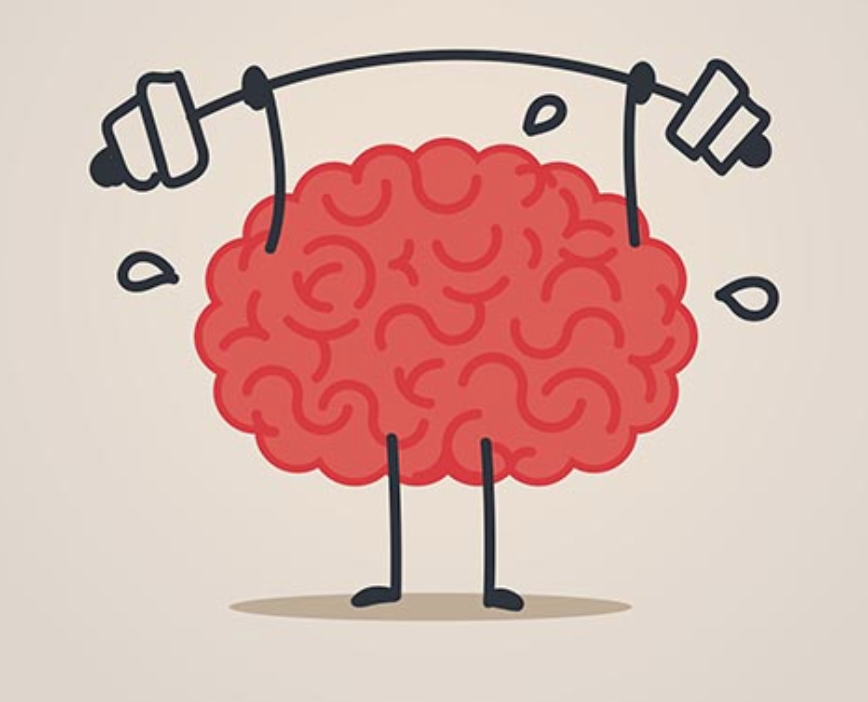
The Mythology of Grind Culture
One of the things Hillary pointed out early in our conversation is that mental toughness has historically been defined through a very specific cultural lens. The examples we celebrate most often involve pushing through pain, ignoring injury, or sacrificing well-being in pursuit of victory. One of the most recent examples of this is Lindsey Vonn’s competing at the Milan/Cortina Olympics having just torn her ACL days prior!
Those narratives have the power to inspire people. They demonstrate what humans are capable of when they refuse to quit. But they also leave out critical context.
What happens after the game ends? What happens to the body, the nervous system, and the mind when those habits of relentless pushing become the only tools available? What happens when the same mindset that helped someone win also prevents them from recognizing when rest, recovery, or self-awareness might actually support performance? When all we have is a hammer… everything has to get treated like a nail.
Hillary described it simply: grind culture often ignores the signals our bodies and minds are sending us. In doing so, it can increase injury risk, normalize harsh self-talk, and create pressure that eventually becomes unsustainable. It also deteriorates performance and lowers our ceiling for potential!
For athletes, coaches, and leaders steeped in this culture, the message can be confusing. If toughness is what got you here, does questioning it mean you’re becoming soft?
Hillary’s answer was no. The goal isn’t to abandon toughness. It’s to expand what we mean by it.
From Mental Toughness to Mental Strength
Hillary prefers the term mental strength. The difference may sound subtle, but the implications are significant. Mental strength still includes resilience, perseverance, and grit. Those qualities aren’t disappearing. But they’re joined by additional capacities: self-awareness, emotional regulation, vulnerability, and the ability to adapt when circumstances change.
In other words, mental strength isn’t just about enduring difficulty. It’s about understanding yourself well enough to respond to difficulty intelligently and with a responsiveness to what the situation actually demands.
That distinction resonated with me immediately, because I’ve seen the limits of the traditional model in my own work. Many high performers have an incredible ability to push through discomfort, but that ability often becomes the only lever they know how to pull. When every challenge is treated as a call to push harder, the system eventually breaks down. I actually touched on this recently in a podcast called The Illusion of Progress.
Mental strength, by contrast, expands the “control panel.” It gives performers more than one way to respond. Sometimes pushing through is still the right move. But other times the better move is pausing, recalibrating, or shifting motivation from fear to purpose.
The challenge is that expanding the control panel requires something that traditional toughness culture hasn’t always valued: vulnerability.
The Wrestler Persona
At one point in the conversation, I invited Hillary to turn the lens on me. She asked about the identity I carried as an athlete. If you’re a frequent listener, you’ve heard me talk about my “wrestler persona.” If you’ve ever spent time in a wrestling room, you know the archetype. The tough, relentless, guy who can push through fatigue, pain, and the voice in your head that says you’re cooked. The guy who can find another gear, and if he can’t, will collapse on the mat before “quitting” on himself or his team.
That identity served me well for a long time. It helped me survive difficult moments and compete at a high level. It’s driven me to succeed beyond sport, pushing me to compete and excel in other ares of my life. But Hillary gently challenged me to look at the motivations underneath it. When I really examine that persona, it’s clear how often it has been fueled by fear of falling short, fear of letting people down, fear of not being enough unless I proved myself in the final moments or make up for moments in the past where I didn’t come up clutch in the end.
Fear can be a powerful motivator. Many high achievers know the feeling of the “buzzer-beater” work style: waiting until pressure is highest, then sprinting to the finish with everything you’ve got. It works, but it comes at a cost. (My fellow procrastinarios, I’m looking at you!). Living that way means your nervous system rarely gets to relax. It means success becomes tied to urgency, and urgency becomes the only way to access your best performance, with the ceiling getting lower on that best performance over time.
Hillary’s coaching question was simple but powerful: what would it look like to keep the edge of that wrestler identity while adding other tools to the panel?
Expanding the Tool Panel
That phrase expanding the tool panel became one of the central ideas of our conversation. In traditional toughness culture, the panel is pretty small. When things get hard, you push harder. When you feel doubt, you silence it. When the body signals fatigue, you ignore it.
Mental strength doesn’t eliminate those tools, but it adds others: awareness of physical signals, values-based motivation, recovery as a performance strategy, and the willingness to question stories that may have once been helpful but no longer serve you.
The shift is subtle but important. Instead of toughness being the only option, it becomes one option among many. Athletes can still grind when the situation calls for it. But they can also step back, listen to their bodies, and make choices that support long-term performance rather than short-term survival. Ironically, this also unlocks an ease that supports performance in the moment as well.
For coaches and leaders, this shift also changes how culture is built. Rather than praising only heroic displays of endurance, teams begin to reinforce behaviors that support sustainability like communication, emotional regulation, and recovery.
Stories as Catalysts for Change
Another theme Hillary and I explored was the power of storytelling in shaping performance culture. For decades, the stories athletes heard most often were about playing through pain or sacrificing everything for victory. Those stories weren’t wrong, but they left little room for athletes who were navigating mental health challenges, trauma, or simply the normal emotional ups and downs that come with high performance.
Hillary’s work aims to broaden that narrative. Through her book, Hello Trauma: Our Invisible Teammate, and her podcast, The Highs and Lows of X’s and O’s, she creates space for athletes to share their full stories, she’s helping normalize conversations about mental health and resilience in ways that make the sports world more humane.
Those stories matter because they give performers permission to see themselves differently. When athletes hear that vulnerability and strength can coexist, the definition of toughness begins to evolve.
What This Means for High Performers
One of the reasons I wanted to have this conversation with Hillary is because I recognize myself in the audience. Many of the people who listen to this podcast grew up in environments similar to mine. They learned to perform through pressure, to ignore discomfort, and to treat vulnerability as something to hide.
There is nothing inherently wrong with those instincts. They helped many of us achieve things we’re proud of. But if we want to perform consistently at a high level (not just for a season, but for a career or a lifetime) we need more than one gear. We need systems that allow us to sustain excellence without burning out.
Mental strength offers that path. It doesn’t discard the qualities that built high performance in the first place. It simply integrates them into a broader framework that recognizes the complexity of human beings.
A Different Kind of Toughness
As our conversation came to a close, I found myself reflecting on something Hillary said earlier: that mental strength requires us to hold multiple truths at once: We can be resilient and vulnerable, competitive and compassionate, driven and self-aware. That kind of complexity can feel uncomfortable at first, especially for people trained in more rigid definitions of toughness.
But it’s also liberating. When performers realize they don’t have to abandon their edge in order to evolve, the door opens to a more flexible and sustainable way of competing. The wrestler persona doesn’t disappear; it simply gains new allies. And in my experience, that expanded tool panel allows people to perform at a high level not just once, but again and again.
That’s the kind of toughness worth cultivating.
Recent Episodes